Dosing Guide
Dosing Best Practice
Calibrating Dosing Equipment
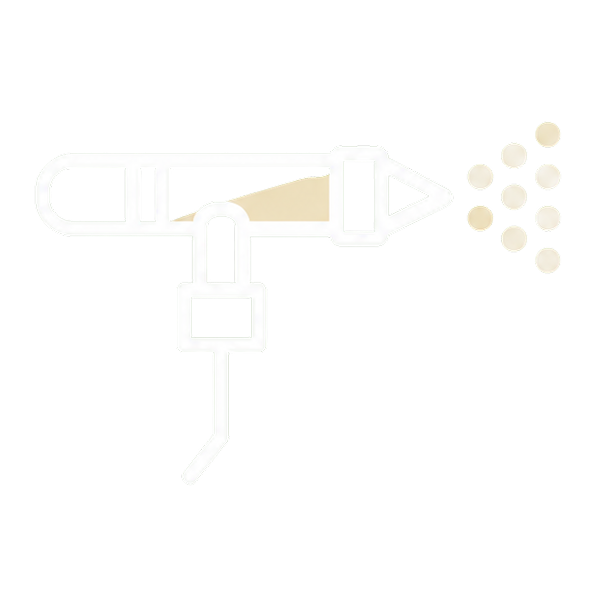

At least once annually, clean and calibrate your dosing gun, pour-on applicator or automatic injector. Do this using a basin of water, or better yet some of the product you plan on using as there may be differences in viscosity that affect filling, and a graduated cylinder or syringe barrel. Set a volume on your equipment, submerge pipe nozzle in water and ensure this volume is delivered in a test run, five times over.
Rotating Wormers

Anthelmintic resistance (AR) is more likely to develop if worm populations are being exposed to the same active ingredients repeatedly. Introducing new active ingredients into an annual protocol will help to minimize the development of AR. On cattle farms this probably means reducing reliance on ivermectin and using white and yellow wormers more often. For example, we could save our ivermectin dose for housing time in pour-on form, given its activity against external parasites and inhibited ostertagia larvae. Opting for other clear wormers is also an option on cattle farms, as research has shown that the likes of moxidectin or doramectin can be effective against ivermectin-resistant worm populations.
On some sheep farms, white wormer resistance has reportedly developed. With this in mind, one strategy is to target nematodirus in lambs with a white wormer in April/May – white wormer-resistant nematodirus populations are rare and the species with documented resistance to white wormers will not be proliferating at this time. Thereafter, farmers could switch to clear and yellow wormers for lambs.
Talk to your vet, SQP or animal health adviser abpout developing the best rotation specific to your farm.
Quarantine Dosing
Any animal coming into a farm should be seen as a potential contaminant. For example, from a liver fluke point of view, a single adult fluke in an animal has the capacity to produce 20,000 eggs daily, and there can be dozens of adults present in an infected animal. Once these eggs hit pasture, if there are intermediate hosts (mud/water snails) present, upwards of 600 infective fluke larvae can result from one single egg. Burdens can escalate extremely quickly, and internal parasites need to be treated as contagious diseases. It is very important that bought-in animals are treated using a quarantine dose.
Equally, if a farmer takes on new land, the same principals apply to his or her own cattle, regardless of previous treatments and particularly if the ground is heavy. These animals may be carrying small parasite burdens that are not escalating based on the current land type (e.g. low snail activity/very dry). However, these parasite burdens could potentially surge in numbers and pathogenicity if conditions are favourable on the new land. Whilst we obviously don't want incoming animals to bring in parasites, we definitely want to avoid bringing in any resistant parasite populations, which is why product selection when quarantine dosing is vitally important.
Weigh Animals

Every livestock farm should have a weighing scales, or access to one. In terms of resistance prevention, best practice around dosing is to weigh the heaviest animal in a group and then treat the rest based on this weight, this is provided there is relative uniformity throughout.
From a gastrointestinal worm point of view, it is accepted that weight gain is a better indicator of treatment necessity than faecal egg count. Hence, one strategy to minimize reliance on anthelmintics during the grazing season might involve frequent weighing, with first dose delayed until performance falls off.
Coughing & Lungworm

Cattle coughing when driven is a sign that there is a burden of lungworm in the system. In older cows it can also be a sign of reinfection with larvae – also dangerous. First cough in driven calves is often used as the trigger for first dose in suckler herds and a good complement to regular weighing from a decision-making point of view.
As a rule of thumb, cattle coughing when driven should be treated the following weekend. Cattle coughing before movement should be treated the following day and cattle exhibiting the classic 'hoose' symptom (head down, tongue out, deep cough) should receive veterinary attention quickly.
Faecal Sample

Often penned as the gold-standard, remember that gastrointestinal worm eggs won’t be detectable in faeces for at least three weeks and lungworm up to four weeks, after our young/naïve animal ingests infective larvae. In older animals, lungworm larvae may not be detectable in faeces even when there is a significant larval challenge and symptoms. Also note that lungworm involves a different preperation/testing protocol to gastrointestinal worms/cocci. In the case of fluke, damage is done by the immature stages (non-egg layers) and it will be much later in the lifecycle before the parasite produces detectable eggs. Liver fluke testing also involves different protocols to gastrointestinal worms.
Anthelmintic effectiveness can be tested 10-14 days post-treatment for white, at 14-16 days for clear wormers and seven days post-treatment for yellow wormers.
Best practice with faecal sampling is to consult your vet or local SQP– they will advise on how to collect the sample. Samples should be taken as fresh as possible. When sampling a group take 50-100g in total, made up of freshly dropped dung from 5-10 animals. Disturbing lying animals should encourage passing of faeces. When sampling a single animal, unless you see them passing faeces and can collect it quickly and safely, put the animals into a chute and manually collect dung from the rectum with a gloved hand. Seal the sample as soon as possible and get it to your vet or SQP. Samples can typically be delivered in a jar or sealed sample bag. Do not freeze the sample.
The same vet or SQP will guide you on analysing the results and any required treatments based on these. Do not be alarmed by small burdens of rumen or liver fluke – there is little damage being done at the mature, egg-laying stage. However, note that the animal can be a potential contaminant for others. Treatment advice will be based on the sensitivity of the test and the circumstances of your own farm – e.g. parasite history, land type, production systems.
Anthelmintic effectiveness can be tested 10-14 days post-treatment for white, at 14-16 days for clear wormers and seven days post-treatment for yellow wormers.
Best practice with faecal sampling is to consult your vet or local SQP– they will advise on how to collect the sample. Samples should be taken as fresh as possible. When sampling a group take 50-100g in total, made up of freshly dropped dung from 5-10 animals. Disturbing lying animals should encourage passing of faeces. When sampling a single animal, unless you see them passing faeces and can collect it quickly and safely, put the animals into a chute and manually collect dung from the rectum with a gloved hand. Seal the sample as soon as possible and get it to your vet or SQP. Samples can typically be delivered in a jar or sealed sample bag. Do not freeze the sample.
The same vet or SQP will guide you on analysing the results and any required treatments based on these. Do not be alarmed by small burdens of rumen or liver fluke – there is little damage being done at the mature, egg-laying stage. However, note that the animal can be a potential contaminant for others. Treatment advice will be based on the sensitivity of the test and the circumstances of your own farm – e.g. parasite history, land type, production systems.
Strategic Grazing
Alternating a pasture between cattle and sheep can help to reduce infective burdens of some of the important GI and lung worms, as the parasite species affecting sheep will not infect cattle and vice versa. The strategy can also dilute the cocci burden (if present) for each species. However, if a farm has a fluke problem this can practice actually worsen it as one species (Fasciola hepatica) infects both cattle and sheep. The same is true for Nematodirus battus and Trichostryogylus axei.
Where a farm has a fluke history, best practice is to allocate dry or reseeded pastures for the high-risk periods – that is, around 5-6 weeks after warm moist weather. Also, getting the farm’s heaviest fields grazed when it is cold and dry will reduce problems down the line as snail activity will be low during this time. Alternatively, when the risk is high, we can dose with triclabendazole products like Tribex and then move to clean pastures – reseeded areas or winter crops would be best here.
Silage aftergrass is also a valuable tool. It should be relatively clean of parasites and we can move animals to it during risk periods.
Dose & Return Or Dose & Move

Traditional thinking around post-dosing animal management was to move to new fields immediately. The theory was that our animal was worm-free and going to an environment with a low burden, so populations would be slow to build up again and thus performance would be maintained.
However, if there are resistant worms in the animal that aren’t killed by the product, moving to a new pasture will give these reproductive advantage – they will only have resistant worms to mate with – for a long period. Now, best practice is to return animals to where they came for 4-7 days and allow re-infection with susceptible worms. These will mate with the resistant worms left behind in the animal at treatment and dilute down the overall resistant population.
However, using a product with residual activity (Moxodex being an example), any susceptible worms ingested will be killed in the system for a period post-treatment, so there is nothing to gain by returning to dirty pastures. In this case, best practice is to leave a random 10% of animals in the group untreated. Avoid leaving very poor- or very well-performing animals untreated, as the former could be at risk of performance/welfare problems and the latter may not be harbouring a high enough burden to have any positive effect.
If it isn’t possible to return to dirty pasture and we are moving animals immediately post-treatment with non-residual activity products (Albex being an example), we would also ideally leave around 10% untreated. These will infect the new pasture with susceptible worms and help dilute the resistant population.
Restrict Feed Pre-Dose

With oral white and clear wormers in sheep, restricting feed for 24 hours pre-dosing can help to optimize product efficacy. However, the practice should be avoided in pregnant ewes or other scenarios where knock-on effects on performance or welfare are possible. Drinking water should never be restricted on livestock farms.
Embrace The Hook
Cattle farmers have become over reliant on topical and injectable worming products and a shift in thinking is needed. Granted, there are human welfare risks when we drench cattle orally. However, there is no excuse for keeping excitable animals on a farm nowadays and likewise none for not investing in safe animal handling facilities. Head scoops are becoming more and more common now and take a huge amount of hardship out of oral drenching. A clever strategy for oral drenching is to source two hook drenchers, having a person hooking animals ahead of the person treating. Once caught, an animal will remain stationery and the hooks can be simply swapped over for treatment. The process is sped up in this way. Filling the chute relatively tightly will also help to make things easier.
CPD for SQPs & Vets
Sharpen your knowledge

FAQ
Frequently Asked Questions