Coccidiosis - what's happening under the bonnet?
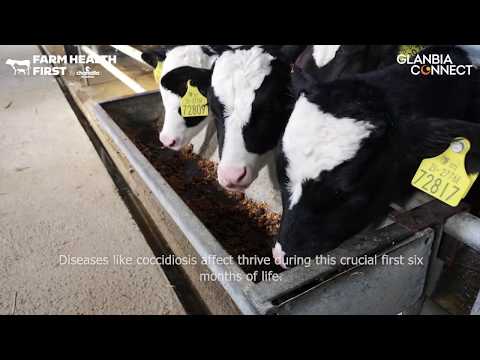
How coccidiosis affects the gut
A single ingested coccidia oocyst can lead to the destruction of 50 million cells in the lining of the intestine.
Oocysts are numerous in the animal's environment and it is inevitable that they will be exposed to them.
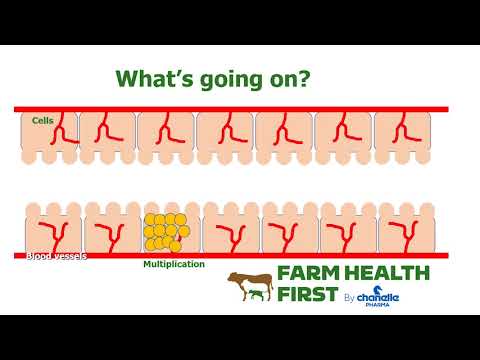
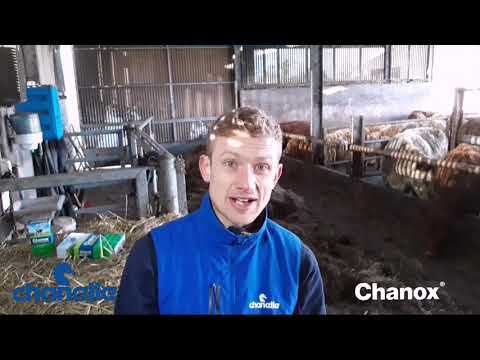
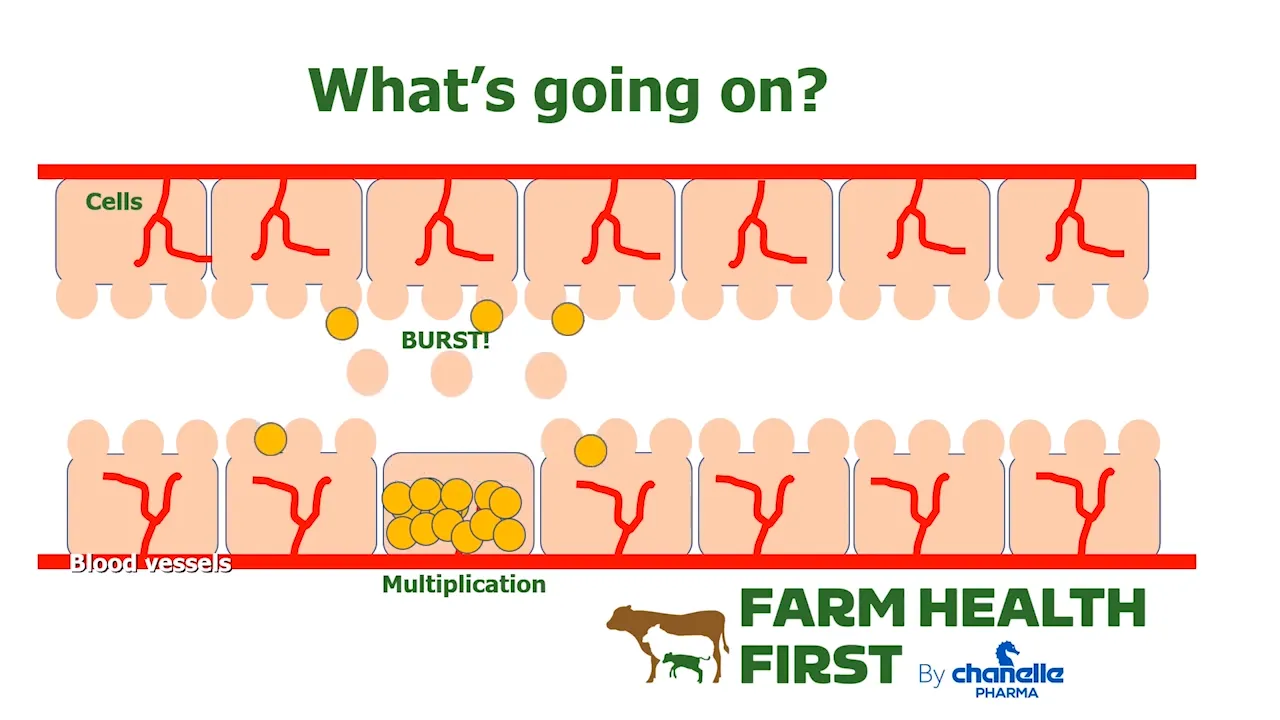
The mechanism of coccidiosis is animated in the video above. It penetrates important cells in the lining of the intestine, whose job is nutrient absorption.
Inside, the parasite multiplies at staggering rates. The cells eventually rupture, losing their ability to absorb nutrients. More coccidia oocysts are then released, penetrating more cells in the intestinal lining and later in the lifecycle, oocysts will contaminate the animal's environment through faeces.
Immunity
Older animals become immune to coccidiosis and, when ingested, the parasites' development is heavily stunted and no effects on performance or symptoms will be observed.
Younger animals have not had a chance to develop an immunity and so when the parasite gets in it causes a huge strain on the immune system. We see symptoms (e.g. blood scour, straining) when the animal's immune response fails to suppress the coccidia lifecycle sufficiently. This generally happens in our weakest/stressed animals (e.g. multiple lambs, poor dam milk, after inclement weather, following transport/weaning/dehorning).
However, the important point with coccidiosis is that in a group with a small number of clinically affected animals, the other animals displaying no symptoms will be burning up energy to keep the parasite suppressed. This is energy that could otherwise have gone into weight gain.
Coccidiosis, on average, causes a 19% sub-clinical/silent growth reduction across full groups of animals.
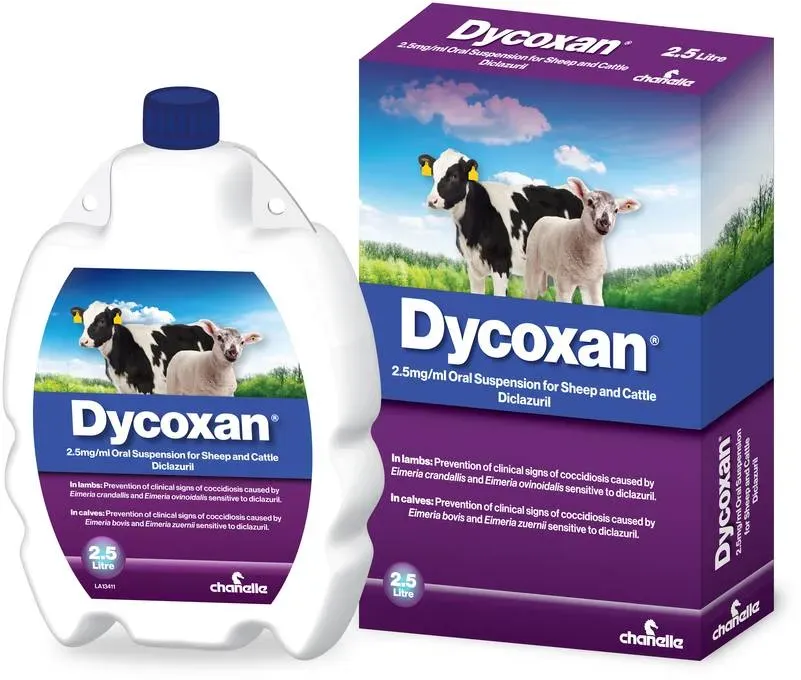
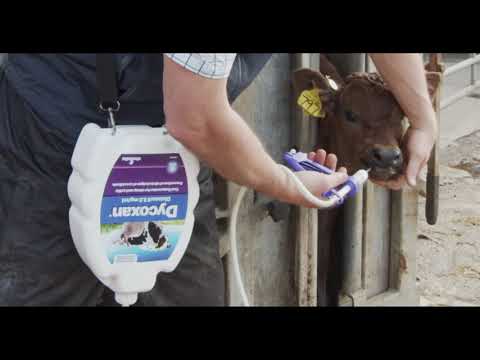
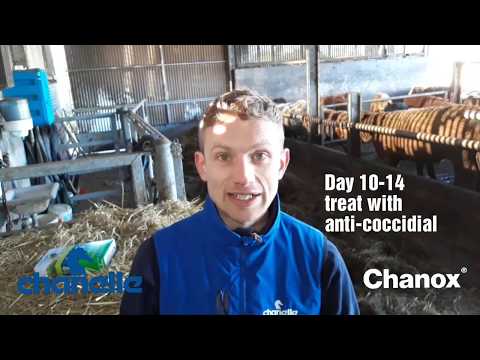
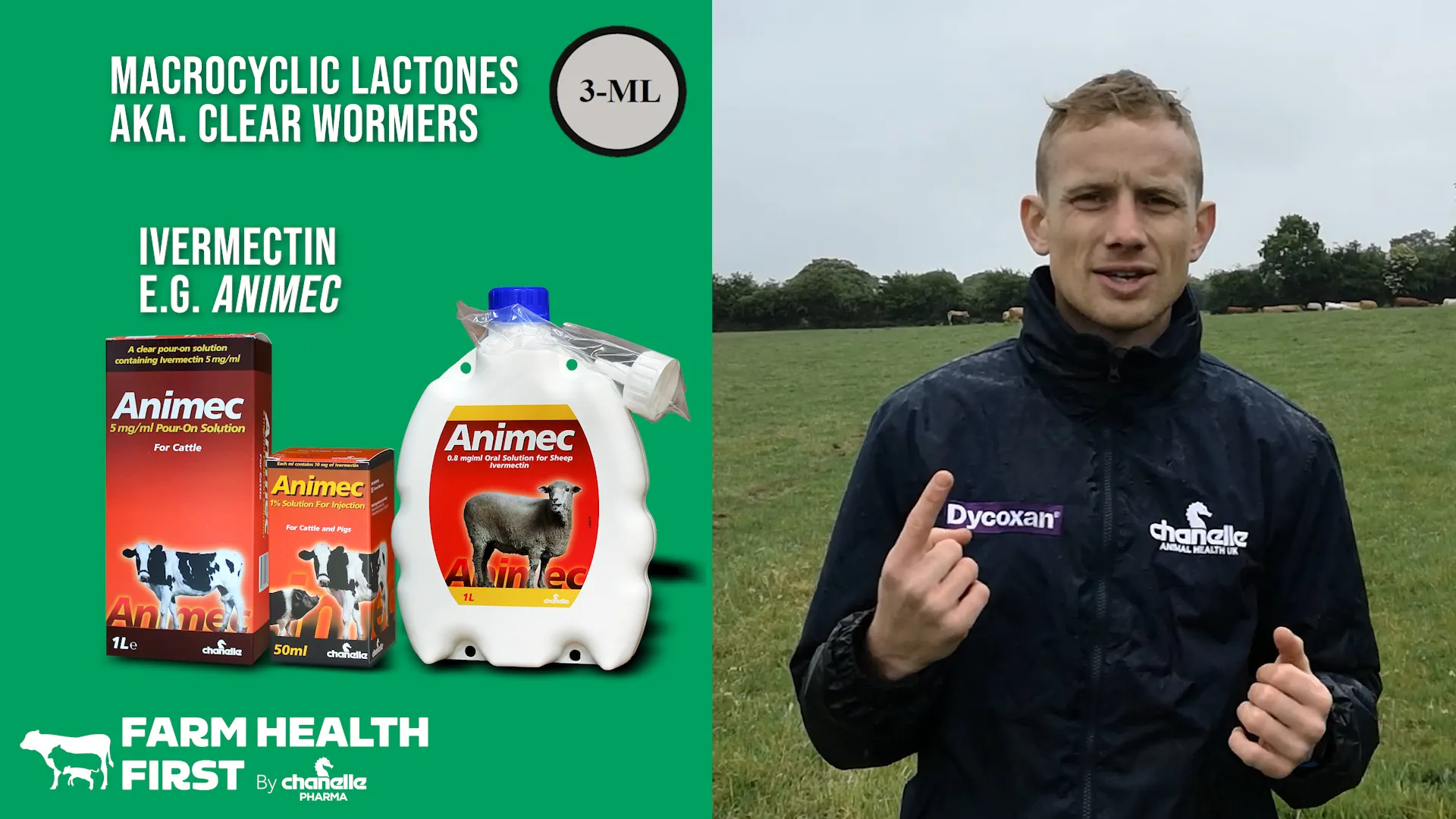
Drenches like Dycoxan eliminate coccidia from the animal and allow immunity to build.
How coccidiosis affects the gut
A single ingested coccidia oocyst can lead to the destruction of 50 million cells in the lining of the intestine.
Oocysts are numerous in the animal's environment and it is inevitable that they will be exposed to them.
The mechanism of coccidiosis is animated in the video above. It penetrates important cells in the lining of the intestine, whose job is nutrient absorption.
Inside, the parasite multiplies at staggering rates. The cells eventually rupture, losing their ability to absorb nutrients. More coccidia oocysts are then released, penetrating more cells in the intestinal lining and later in the lifecycle, oocysts will contaminate the animal's environment through faeces.
Immunity
Older animals become immune to coccidiosis and, when ingested, the parasites' development is heavily stunted and no effects on performance or symptoms will be observed.
Younger animals have not had a chance to develop an immunity and so when the parasite gets in it causes a huge strain on the immune system. We see symptoms (e.g. blood scour, straining) when the animal's immune response fails to suppress the coccidia lifecycle sufficiently. This generally happens in our weakest/stressed animals (e.g. multiple lambs, poor dam milk, after inclement weather, following transport/weaning/dehorning).
However, the important point with coccidiosis is that in a group with a small number of clinically affected animals, the other animals displaying no symptoms will be burning up energy to keep the parasite suppressed. This is energy that could otherwise have gone into weight gain.
Coccidiosis, on average, causes a 19% sub-clinical/silent growth reduction across full groups of animals.
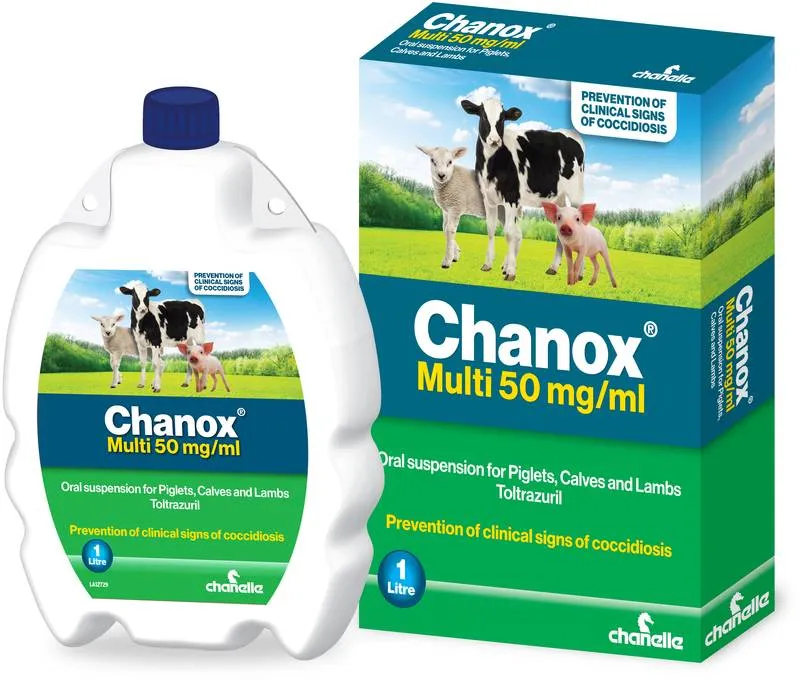
Drenches like Dycoxan and Chanox eliminate coccidia from the animal and allow immunity to build.



Newsletter
Products

Videos



















Blog















.webp)
.webp)
.webp)
.webp)
.webp)
.webp)
.webp)
.webp)
.webp)

.webp)

.webp)



.webp)
.webp)


.jpeg)









.webp)

%2520-%2520What%2520is%2520coccidiosis_%25200-27%2520screenshot.webp)



.webp)





.webp)



CPD for SQPs & Vets
Sharpen your knowledge

DOsing Best Practices
Get the dose right every time